What are the top 5 questions global CEO’s are asking as we approach 2029?
We consult with some of the world’s largest companies in the areas of:
– Leadership Development
– Management Strategies
– Performance enhancement across a variety of disciplines
– Sales and marketing improvements
– Change Management pre- and post- M&A
I ask you to consider the following questions knowing that the effectiveness of strategies are in direct proportion to the quality of the questions that precede them.
1. Where do you see your company in 2029?
2. Looking back from 2029 to today, can you identify the internal and external obstacles that could possibly stand in your way?
3. How many on your executive team see your vision the way you do?
4. Is it possible that you are in 2029 alone?
5. If your executive team does not share your vision, why not? Are their goals — personal or business — in conflict with yours?
6. Have you identified areas of improvement? Are you certain they are truly the only ones holding you back?
Do any of the following sound familiar:
1. Top sales personal promoted to management without sufficient support?
2. Critical retention rate and recruiting issues?
3. Engineers required to transition to sales & marketing?
4. Repair teams not recognizing sales opportunities?
5. A traditional management culture rather than the new coaching culture?
6. Disconnect between R&D and end user?
7. Cultural management and marketing obstacles unique to global locations?
8. Less than 100% customer focus?
9. Inadequate use of the power of strategic personal networking?
10. Too few rainmakers?
11. Loss of business due to first impression issues?
For more on how strategic companies are approaching these issues see the articles section at http://www.DanSchaeferPhD.com
In addition, I work with a limited number of clients helping them discover what’s not working and put the right strategies in place.
If you are facing challenges and feel that this kind of approach may help, I invite you to contact me directly to determine if there is a fit.
What if you look like you are here, but you are not really here?
What if you are already in 2029 but your client is in 2024? What do you do now?
I welcome a 15 minute complimentary call on Zoom with you to talk about why you may want to be in 2029 working backwards
Stuck… sales are flat… deals are not closing… partners won’t even talk about change… no sign of a promotion… not sure I’m in the right field… have opportunities but not sure of which one to take… managing down or up seems to be blocked… I can see the political landscape but not sure what to do next… something just doesn’t feel right…
You feel it… the company feels it…. we all feel it. we’re doing what we have always done…what’s worked before… and we’re doing more of it… but not much or not enough is happening… deals are getting ALMOST there… responses are slow to come or stopping all together… the conversations you know you need to have been not happening…
Consider this….it could be worse…. you could be moving rapidly in the wrong direction…. making the wrong moves…. saying the wrong things at the wrong time to the wrong people. You may have heard the statement “when you’re in a hole the first thing to do is to…. stop digging.
Easy to say, from the outside, but often you are aware that there are obstacles but right now they are invisible.
A very successful business guy asked me to help him with a very important piece of his golf game. It would not involve equipment golf swing or instruction. His teaching pro would take care of that. Something was happening consistently that he couldn’t figure out/ Here’s his description “I have developed a hitch in my swing” at the top of my back swing I do this weird lift. My friends notice it.
I asked him to describe to me when it happens. You may be surprised to discover that it only happened when his ball was sitting perfectly in the fairway never when it was in the sand or in a difficult lie. As successful as he was, I asked if he was ever in a situation with his business where he was about to “blow it wide open” and somehow, he put a “Hitch” in the deal. He thought for awhile, I asked him did it sound possible. He said yes. As he reflected on these key deals and described these key situations it was clear that he recognized a pattern I asked if he wanted to explore it, he said no and left……………To get the edge to want it, you must see where you want to be, identify obstacles, and move with momentum and consistency. You have to grab it.
We’re stuck is what moved the CFO to get me in front of the three principals of her firm. OK! Let’s go out 5 years…I give you a magic wand. You wave it. now we are all in 20XX. What does your life look like, what does the company look like? What’s going on with you and your company…… This 20XX 5 yr out strategy can involve a few hours for an individual and longer for a team, but the results can be revealing. # 1 says he wants to triple the size of the company that’s 10 million to 30. #2, much to the surprise of #S 1 & 3… says he wants to cash out. # 3 says he wants to exit but come back in some consulting arrangement.
Clearly, as reflected by the confusing messages unconsciously being sent down by leadership as well as fragmented management styles, marketing, sales, and admin were largely directionless. It was a management nightmare. In this situation each partner was stuck. They began a process of redesigning their company toward their individual goals and objectives. This was a much easier task once the obstacles were identified
President of the US division of a global company based in Australia said his sales had stalled. “What do you want to happen in 5 years” I asked.
“Triple the size” of the company, he replied. He described a few situations nationally with his sales team and really gave me the 1000’ view of the company. Then I asked him how many people reported to him. Twenty-two he replied. We were at breakfast so I suggested that we needed to get a check, that I enjoyed meeting him but that I couldn’t help him. He was surprised. I asked what he would do when he had 66 people reporting to him daily. His management style handcuffed him. I reminded him that in HP, under Carly Fiorina would limit direct reports to 7 people.
It took us about 4 months, but the restructure put him on a far more positive track. The process and his desire to get the edge Un-cuffed him and his leadership team.
Getting unstuck worked… Knowing you’re stuck is where it starts
We’re stuck!!! means different things to different people in different situations. Personally, in relationships both personal and business, in family businesses, in individual performance in business and sports, whether professional, college or high.
Different things to different people. Here is a partial list to consider
_____ I find myself struggling with balancing my career and personal life.
_____ I am considering a transition. Does it have to be trying and difficult?
_____ I frequently feel “stuck” in patterns that slow down my progress?
_____ My desires are frustrated because I have an aversion to confrontations.
_____ Could I be afraid to fail? Is fear of failure impeding my progress and detracting from my quality of life?
_____ Important new growth and profitability initiatives stalled because of confused or less than effective management personnel?
_____ Key management personnel seem “split into camps” because they cannot agree on critical policy issues?
_____ Top management personnel feel isolated and lacking effective sounding boards?
_____ I would like to have a confidential sounding board to advise me on people, culture issues and the psychology of everyday corporate life?
_____ The perception is that top management is out of touch with staff personnel?
Other frequently occurring STUCK signs…
We’re having trouble closing the big deals.
Our senior team is not working well or consistently towards the same goals.
Members of our senior team need help developing specific skill sets.
We don’t want to make the same expensive mistakes others in our industry – or on our career path – have made.
I want to achieve work/life balance without sacrificing top performance.
I simply need a confidential sounding board.
Athletics
If you’re an individual athlete, coach, manager, or team owner, call us when:
You notice a drop-off in a particular player’s performance.
You feel a particular player is not living up to his or her potential.
A player seems distracted or unfocused, on the field or off.
Team members are not working together effectively or consistently. [Athletes may avoid talking about this]
If you’re an athlete, call when:
You’re having trouble concentrating.
You feel you have more to give to your game, but you cannot access it.
You find yourself in a slump.
Balance has become a significant issue in your life.
You have no one you can safely discuss these issues with.
“What do I do now???”
If any of this sounds familiar, you may want to check out my website www.DanSchaeferPhd.com for more resources or give me a call at: (917) 880-6758
The elevator descended slowly. The ride, as always began on the 20th floor. Russ noticed the unusual design of the elevator car. “How can it be this large” he thought. “ A fine oriental carpet, leather recliner, soft lighting, Pachelbel Canon, piped softly into the car. “Great elevator, great ride” he thought.
He was subtly aware of the car’s movement. The numbers, indicating the change in floors, were unusual. Rather than the traditional small numerals, a large number 20 appeared on the door. As he focused on the number it began to fade into a fog as a number 19 emerged. The numbers changed slowly. He felt increasingly relaxed. This was not an unusual experience for Russ. Some days, the car seemed to move quite quickly but today, the descent was at a slow comfortable pace until he reached the first floor.
He had looked forward the door opening. The view, he knew, would be beautiful. The fragrance of the flowers, along with the sound of the wind in the trees, was always pleasing . His trip down the gravel path seemed to vary in length each time he came to practice. Today, however, he seemed to feel more energized than usual. He had come to practice his game. There were, he was sure, few who had the facility he had designed. Golf was his game, this is where he came to improve it . This is the place he came to practice, play, work and… relax.
There were times when he took his time to arrive at the house. He would often stop for a swim. He found his laps to be relaxing. The pool, a two- lane lap pool, was set beautifully on the lawn in front of the house. A single chair stood by the pool- side, two towels awaiting his arrival. The pool area itself was beautiful. Surrounded by tall sea grass that added to the privacy. He often stopped to notice the rhythmic swaying of these graceful reeds. It relaxed him. He often seems to lose track of time. Not sure of how long he spent in the pool but sensing that here, time really made no difference.
The house was magnificent. He had designed every detail himself. It was however, unusual in one respect. It had only one room. A large den. The great stone fireplace, thick, comfortable rug, and a soft relaxing reclining chair. Were anyone able to visit, they would notice the 4 large screen TV’s that lined the wall in front of Russ’s chair.
By far the most dramatic aspect of this space was the golf practice facility that Russ created beyond the glass wall and sliding glass doors.
An expansive slate patio met unusually high grass, for a lawn. Intentionally left long, he said, because he needed the challenge. Thirty feet blended into a shorter grass and a slope that ended at a beautifully manicured green. Russ described the green as quite large, excellent, he said for practicing his long putts.
The green was protected by four bunkers of varying depths. Looking back up the fairway, at about 110 yards, a fog seemed to descend that blocked his seeing any further. Just the right amount of space, he said, for his short game. Adjacent to this special place, only a short walk, was a tee box and an extremely narrow fairway, 50 feet wide at most, boarded on both sides by tall pines. “ I need it to be narrow” he said “it keeps my drives straight.” The fairway was easily 350 yards long.
Today he decided that he would spend his practice time in the sand. He selected a rather deep bunker, and dropped 30 balls in a place where he could barely see the flag. Setting up over the balls, and taking.
All the time necessary, he made 30 consecutive perfect shots. His swing had the perfect tempo. He could feel the club in his hands, hear the sound of the club- face making contact with the sand and see the ball move gently toward the pin. Today, having a bit more time he decided to watch himself make these shots on his TV screens. He enjoyed the ability to adjust the speed of his swing with his remote. “It helped” he said “ when he actually played. He sensed that time was getting short now.
As the LIRR pulled into Penn Station, he moved back to the elevator, counted from 5 to 1 and quickly returned to his seat.
Creative visualization is a valuable tool to enhance the “ Mind Game” . We may have a built in resistance to making use of visualization if we consider it daydreaming. We all know what parents & teachers said about daydreaming.
Consider WIIFM factor. [ What’s in it for me]. More performers utilize visualization than speak about it. For the athletes and executives as well, it allows them numerous opportunities to practice. How else can they play their home course when it’s under a foot of snow? For golfers, your mind game and visualization can carry you through the winter. The practice will pay off.
For information on Dan’s programs for performance enhancement in business, sports and the arts call or text: (917) 880-6758
Imagine, for a moment, that you were to take a different view of your business and what you provided to your clients or customers.
What if….when asked “so,….what do you do?”, you decide to deal with this marketing opportunity a bit differently, strategically and creatively than before? What if you decided to give yourself a competitive advantage over everyone else being asked the same question?
First…. what do YOU want to have happen after you answer this all too common question?
You want them to offer to buy your product or service, on the spot no questions asked. [not likely]
You want them to know exactly what you do and understand your service and value to them, immediately. [not likely]
You want them to ask for your contact information
You want THEM to suggest that meeting or speaking with YOU in person [ in confidence] or on the phone might make sense.
You definitely want them to find you …… DIFFERENT.
How can you make this happen so often that your response boarders on shock?
Consider the following:
You don’t want the person to just smile politely, & say “that’s nice”
You don’t want them to glaze over as you speak
You don’t want them to think “Oh, s/he’s just another… you fill in the blank.
You don’t want them to walk away.
What feelings don’t YOU want them to feel?
You want to make the best use of the 6 seconds you have to become different. Wherever you are… whether it’s a networking event, business meeting, social environment or the proverbial “elevator” you will want to be prepared.
The response that follows may FEEL uncomfortable.
Let’s try the question again…
“So…What do you do”?
You pause a bit.. and reply with a smile, “Well… I sell mistakes!”
Question…
Do you have their attention?
Do you sound like everyone else?
Are they going to walk away?
Have you broken glaze-over?
Are they going to ask you about your business?
Even if they THINK they know what you do, they will often ask more than once.
So, what would you put on your Top 10 list? What mistakes did your clients make BEORE they became a client and what did it cost them in MONEY, EMOTION and REPUTATION?
This may surprise you but your kid is already in business. He or she is the CEO of their own company.
Business is difficult today when you already know you are in business. Far MORE difficult however when you are running a company and you don’t know it.
This is the trifecta!
On field performance
Academic excellence
Off field behavior
A great High School Hockey Goalie with mediocre grades complained to me that his parents were on top of him because of his poor grades (high 70’s to low 80’s).
Having already spoken about college and ultimately the NHL I surprised him when I mentioned that the way I looked at it… his parents did not make much of a difference. What really made a difference, I pointed out, were the college coaches who would love to recruit him but were not sure he could remain academically eligible.
Acting as a CEO he now had some BUSINESS decisions to make. He acknowledged that every decision he made was a BUSINESS decision. From his diet, to his training, to who he associated with, to what he posted on line, to improving his grades he realized this things would decide if he would play college or professional hockey.
It happens very quickly. The contract is in front of you, your pen moves across the paper, the ink is still not dry and your business status changes immediately.
Instantly you are the CEO of your own company.
The_______Group [enter your name]
From now on every decision you make, both on and off the court becomes a Business Decision. It’s no longer just tennis. You are the franchise, the talent, and the product whichever way you would like to describe it. Ok! Hopefully, you buy the concept…now what?
Successful CEO’s are constantly challenged to guide their company toward long- term success. Focusing on their product or service, they become responsible for product development and improvement, continuing education, public relations, sales and marketing, branding as well financial and legal issues that affect their firm. Success, once reached, requires constant attention. Taking your eye off the ball can lead to disaster.
CEO’s, in confidence, will tell you that they are “Alone at the Top”.
So CEO’s need answers. They know that they do not have to have all the answers and do not need to have all the answers themselves. They need three things; the right questions, the right people to ask and then they need the courage and confidence to ask. “Smart people surround themselves with smart and talented people…that’s what makes them smart people”
A SWOT analysis will help quickly.
They also must access their own skills. Do they have to assemble the best team possible or can they carry the ball themselves? If they need a team, where does the recruiting start? Now for a very important question… do they do it themselves?
What can the successful athlete draw from a successful business practice? Why are more and more companies currently in 2018 working backwards?
Strengths
What do you do well? Training, coaching plus your lifestyle choices either add to or take away from your competitive edge. How do you practice and play your mental game? Do you work on focus and concentration? Are you aware that those athletes who work on their MIND GAME may tell you that they are doing something but almost never tell you what they do. They often describe it as a secret weapon. Teams, using this strategy as a group, insist on a confidentiality agreement. No one wants to give their EDGE away.
It is important to speak positively to yourself .Tell yourself what you want, and the outcome you seek rather than what you do not want.
How & when you train, what you eat & drink, where you go and with whom, virtually every decision you make is a BUSINESS DECISION. If you are involved in business off the court, focus becomes critical. Professionals have found that they cannot allow business concerns to invade their mindset and their need for peak performance on the court. Specifically designed strategies to quickly CLICK on intense concentration at will allow individuals to engage in multiple tasks, going from one to the other with ease.
Weaknesses
I suggest that you look for areas that you need to develop. Where do you need assistance to maintain and assure your business [sports and business] growth? How do you protect your future? First it is important to identify what you do well. Are you asking the right questions of the right people?
Opportunities
Question…You are your business. What opportunities have you missed? Which are open to you today that you are not taking advantage of both on and off the court? How many are on the way that you will want to prepare for.
Threats
What threats exist for your company? Make a list of every possible “really bad” business [personal] decision you could make that would destroy your business and career
The Next Step…
What’s your dream?
Discover strategies on a call with Dr. Dan Schaefer at:
This is the first in many posts that will be drawn from my book CLICK! The Competitive Edge for Sports, Entertainment and Business and the experiences of professional and student athletes, entrepreneurs and global business leaders focusing on their challenges and obstacles, often invisible, that might tend to derail them.
Winning, and the preparation that is required, provides us with an incredible opportunity to learn from highly trained athletes. What do they do differently? What should we listen for and how can we internalize this information and apply it in everyday life? How do we learn this information — where and how do we use what we learn?
Learning takes place both consciously and unconsciously. Your conscious mind is very intelligent. It is the part that you use to listen, learn, analyze, synthesize, accept, reject, plan, negotiate and train others. Your subconscious mind, however, is intuitively very smart. It knows what you want to accomplish and will gather the information and retain it until you need it.
Athletic performance seems to happen without thought…almost automatically. What is the experience like …how do athletes describe it? A world cup slalom skier relates the following, “I stood in the gate being vaguely aware of the panoramic view of that surrounded me. As the count got closer it seemed like my vision narrowed…almost as if I was looking through a piece of PVC pipe and focusing on the first gate. I took off toward that gate and don’t remember any of the others. My only awareness was the sound of my skis on the snow. It seemed to be over very quickly”.
And so we have a highly trained athlete whose training has enabled him to perform and respond to rapidly changing circumstances seemingly without thought. What can go wrong? What do they want to have happen?
We’ll cover an extensive wish list in upcoming posts but today I want to focus on…
Identifying and controlling distraction. This is just one of an extensive list The CLICK! System strives to eliminate ANYTHING that can come between the skill in the subconscious mind and the actual performance.
To remove the possibility that their son would have to deal with his concern for their safety in Sochi, the parents of Olympic speed-skater Tucker Fredricks will be cheering their son on from the comfort of their living room instead of track side in Russia next month.
Fredericks has asked his family to stay home in Wisconsin because of security concerns.
The last thing Peyton Manning needs prior to the Super Bowl is a flurry of requests for tickets from friends, family and business associates. His brother Eli according to media reports is taking care of these requests for his brother.
The bottom line is that the nothing belongs on the field or track but football and skating.
Going forward you may be surprised to notice that you become more and more aware of distractions. Learning to control them begins with noticing.
Strategies to control your MIND GAME are intriguing and you’ll discover them becoming second nature.
Reposted for August 8th, 2020 because it helps as much as when it was written in 1998 by Dan Schaefer PhD.
Dan Schaefer PhD.
In early December 1998, the NJ League of Municipalities, in response to member requests, devoted a day to looking at the impact that loss [community tragedy, death, accidents, family illness] had on the community, public service professionals and their staff, as they attempted to respond appropriately.
Those in attendance agreed that in spite of the unpleasantness of the topic, that tragic events do happen with enough frequency to warrant planning a suitable strategy.
Each of us, I am sure, can remember the annual fall fire drills in elementary school. Since our first lesson was that there was no time to get our coats, is it my imagination or was it always raining & cold when the fire bell rang ? That observation aside, I can remember the drills but never a fire in school. In spite of the absence of a fire in 16 years, I would have been concerned if I discovered that the school my children attended felt that preparation for such an event was unnecessary. Our workplaces will experience and be impacted by numerous losses, both tragic and traditional, over the years, many more by comparison than school fires but strategic planning, for grief in the workplace, is often overlooked.
There are some compelling reasons to look carefully at grief in the workplace.
1. Financial…..Unrecognized grief fallout can be extremely expensive and emotionally draining both short & long term and in addition until it is identified will continue unabated.
2. Staff support….. Our colleagues are all affected, in different ways, by community tragedy as well as personal losses and losses experienced by co workers.
3. Management & supervisor support….. People who manage and guide others in the workplace agree that grief impacts on them personally and adds significantly to their challenge. Grief can place enormous pressure on the process of goal achievement.
4. An environment that is supportive and understanding of the grief process enhances organizational loyalty.
5. Finally………..IT’S THE RIGHT THING TO DO.
There are two things to consider as we approach this issue. Awareness, how does grief impact on an individual and the workplace and what strategies can we have in place to assist us when events occur.
It was just three weeks after the death of Jacks 32 yr. old son that the traffic violations began to pile up. “ First it was two speeding tickets back to back,” Jack recalls. “A week later I passed a stop sign and shortly after that incident, I ran a red light”. “Honestly,” Jack says “ I don’t remember seeing the stop sign or the red light. I was lucky no one was injured.” Jack expected to grieve but was totally unprepared for his lack of concentration and surprised that a perfect 40 year driving record could fall to the grieving process.
This event may seem far removed from municipal or corporate concern. However, the perspective changes if Jack is driving a municipal/ company vehicle or a school bus.
With this example in mind, we might then ask the following: Are today’s managers sensitized to the impact of personal and workplace loss and life transition issues, on the individual and their work environment? Are they prepared to deal effectively with the loss and its effects?
Managerial effectiveness and success is dependent on an enhanced understanding of human behavior. Sadly, we discover that for a variety of reasons, there is little, if any, information, presented to people who will surely confront the grieving process, on a regular basis. What can be expected of a grieving individual or a grieving staff? “ When Pat’s husband died, we were anxious about her return to work. We didn’t know what to expect, what to say that would help. We didn’t want to intrude but also didn’t want to say the wrong thing. Basically, we didn’t want to make it worse.”
When we speak of loss most often the focus is placed on individuals who have experienced a death of a loved one. Losses like divorce, separation, downsizing and job loss, relatives who are critically ill, aging parents and loss of a pet, all have the potential to produce reactions the relate to grieving.
There are sudden events which get our attention immediately. Death of a police officer, firefighter, municipal official, and accidental deaths involving children or teachers are just a few. There are other losses that, as supervisors, we become aware of. We are either approached directly, or receive news from co-workers.
In a survey conducted by the Wells Fargo Bank, it was discovered that employees decide to confide in a supervisor or co-worker much more frequently than they seek professional assistance. Their study illustrated an often overlooked dynamic. There is far reaching “ripple effect” to loss. Whereas the focus is understandably placed on the individual who has experienced the loss this author suggests that we look at the role and preparedness of those who surround the grieving individual and who, because of their interaction with the bereaved, become part of the process. What is the impact of an employee’s grief on co workers, management, and others with whom they interact.
Each person responds differently to impending or actual loss. And so as we look at this issue it is important to remember that the following material is not a prescription that can be applied with anticipated results. This information should be viewed as a roadmap. The goal then becomes how much we know rather than how much we do. Often the greatest damage is done when our expectations and the grieving persons expectations are set too high.
Consider the following normal dynamics of grief and the implications they might have.
Grief lasts much longer than most expect. [ Often years]
Grief changes. People often describe the experience as being on a rollercoaster. Downs often occur at holidays & anniversaries.
People report:
Short attention span…. “I have trouble remembering things”
“ In the two weeks following the death of my husband
I locked the keys in my car four times. Twice with the motor running”
Impaired decision making…..a difficult position for when a job involves important decisions.
Time distortion…..losing track of time.
Concentration difficulties…… while driving, completing multiple tasks.
There are also physical reactions that are important to consider. Restlessness, weight gain or loss, headaches, sleep difficulties, heart palpitations, fatigue, blurred vision, exhaustion, illness are all possible symptoms.
People report feeling extremely sensitive, preoccupied, bitter, irritable, disorganized, angry and depressed. Once again, all normal response.
In addition to the more common managerial challenges of today’s workplace, failure to anticipate and develop strategies to respond to these issues surrounding loss, routinely result in costly errors, omissions, and accidents.
Productivity, morale, customer relations and public image all have the potential to be impacted by employee loss experiences.
Awareness improves our ability to respond to the individual appropriately keeping in mind that…
1. People [Co-workers] are affected emotionally, physically and psychologically by a wide variety of personnel losses.
2. People often exhibit behaviors and reactions consistent with bereavement dynamics [anger, anxiety, depression etc.]
3. People are often not aware of the origin of their feelings, reactions and behavior.
4. Individuals may be affected by previous loss experiences.
5. People who have a better understanding of the origin of their feelings may exhibit more effective coping skills
The staff member’s family also experiences, both consciously and unconsciously, a variety of reactions consistent with identifiable grief reactions. As the family members cope with a variety of losses and transitions, they may fail to recognize or anticipate, in advance, their own emotional and behavioral reactions to this change. In addition, as difficult as it might be for this recognition to take place on the families part, their reactions are often complicated by a profound lack of understanding from those in their support system. It is important for us to be conscious that issues are being brought into the workplace.
When we acknowledge that family members are affected emotionally, physically and psychologically by both recognized & unrecognized losses it enables us to better understand the additional pressure placed on grieving individuals.
This pressure may further complicate the emotional and psychological state of the staff member. The availability of information on the normalcy of grief dynamics may provide a better understanding of the origins of their feelings and enhance coping skills.
Susan, a branch manager for a local bank, found that her ability to cope with her responsibilities began to diminish and noticed personal errors increasing as her mothers terminal illness progressed. “ Managing, supervising, decision making and public relations became monumental tasks.” Susan recalls. “ Lucky I was in a caring work environment with people who understood.”
Grief is a process that requires a coping strategy rather than a problem that will respond to a “quick fix”.
As grief dynamics are frequently unrecognized, misinterpreted or not spoken about, in particular by those most affected, the importance of recognition lies in the support given to staff as well as the interventions chosen. Supervisors and staff must deal with a variety of both personal and job related losses while under the pressure of tasks that require exceptional performance.
A staff person, who confides a terminal diagnosis of a family member is, in fact, informing a supervisor of the potential for a wide range of feelings and reactions that may be experienced over time and that may increase as the illness worsens. The supervisor may also anticipate a period of time in which the individual may be grieving, if a death occurs, followed by a healing process.
What strategies have been effective? When planning a strategy it is important to re visit awareness. If the people designated to respond to grieving families or a grieving community are unprepared the results will be less than desirable.
Much of responding to families is found in sensitivity. What not to say
becomes as important as what to say. Ask anyone you know, who has experienced a loss, to tell you the words, said to them, that hurt.
Flexible work and vacation schedules, offering assistance with projects,
relaxed work loads, team support are just some ways that grieving people have commented on as indicating true concern for them and understanding of their loss.
“ I found myself, sitting at my desk, unable to hold back my tears” Cathy recalls. My boss said “ Cathy, when a bad time hits you, feel free to use my office”
“ I can’t tell you how much that meant to me”.
An organization, that recognizes grief as an ever present part of the workplace and a process that requires a sensitive coping strategy, will go a long way toward providing a nurturing environment for valued employees as well as a caring outreach to the community.
Written by Dan Schaefer PhD. call or text: 917-880-6758








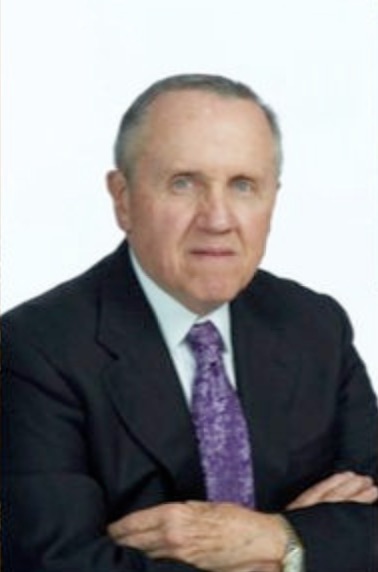
 Dan Schaefer PhD.